

Olive wood cutting boards have become a kitchen favorite. But are they really worth the price, or are they just another Instagram trend? If you’re thinking about upgrading your kitchen tools, this detailed olive wood cutting board review will help you decide.
Let’s dig in.
What Is an Olive Wood Cutting Board?
Origin and Material
An olive wood cutting board is made from olive wood, mostly grown in Mediterranean regions such as Italy, Spain, and Tunisia. These trees are famous for producing olives, but once they stop bearing fruit, their wood is repurposed into beautiful kitchen products.
And trust me—this isn’t ordinary wood.
Olive wood is dense, strong, and naturally rich in oils. That makes it perfect for kitchen use.

How It’s Different from Other Wooden Boards
Unlike maple or bamboo boards, olive wood has dramatic, swirling grain patterns. No two boards look the same. It’s like owning a fingerprint from nature.
Plus, olive wood is harder than many common woods, which gives it extra durability.
Why Olive Wood Is So Popular in Kitchens
Unique Grain Patterns
Let’s be honest—looks matter. Olive wood cutting boards are stunning. The golden brown color mixed with dark streaks makes them look more like art than a kitchen tool.
Place one on your countertop, and suddenly your kitchen feels premium.
Natural Antibacterial Properties
Olive wood contains natural oils that help resist bacteria. While you still need to clean it properly, this natural resistance gives it an edge over plastic boards.
It’s like having built-in protection.

Key Features of Olive Wood Cutting Boards
Durability and Hardness
Olive wood ranks high in hardness. This means it can handle daily chopping without wearing down quickly.
You won’t see deep knife scars easily. It stays smooth longer.
Knife-Friendliness
Here’s the balance you want: hard enough to last, soft enough to protect your knives.
Olive wood hits that sweet spot. It doesn’t dull your blades like glass or stone boards.
Moisture Resistance
Thanks to its natural oil content, olive wood resists water better than many other woods. It doesn’t absorb moisture quickly, reducing the risk of warping.
But remember—this doesn’t mean you can soak it in water.
Natural Beauty and Aesthetic Appeal
This board doubles as a serving tray. Use it for cheese, bread, or grilled meat, and your guests will think you hired a stylist.
Function meets beauty.

Pros of Olive Wood Cutting Boards
Long-Lasting Performance
When maintained correctly, an olive wood cutting board can remain durable and functional for many years.
. It’s not a disposable kitchen item. It’s an investment.
Eco-Friendly and Sustainable
Most olive wood boards are made from pruned or retired trees. That means no trees are cut down just for wood production.
It’s a sustainable choice.
Multipurpose Usage
Chop vegetables. Slice the meat. Serve cheese. Display snacks.
One board. Many uses.

Cons of Olive Wood Cutting Boards
Higher Price Point
Quality comes at a cost. Olive wood boards are usually more expensive than bamboo or plastic ones.
But you’re paying for durability and beauty.
Requires Maintenance
You’ll need to oil it regularly. Ignore this step, and the wood can dry out and crack.
Think of it like skincare—skip moisturizer, and problems start.
Not Dishwasher Safe
Never put it in the dishwasher. The heat and water pressure can ruin it.
Hand wash only.
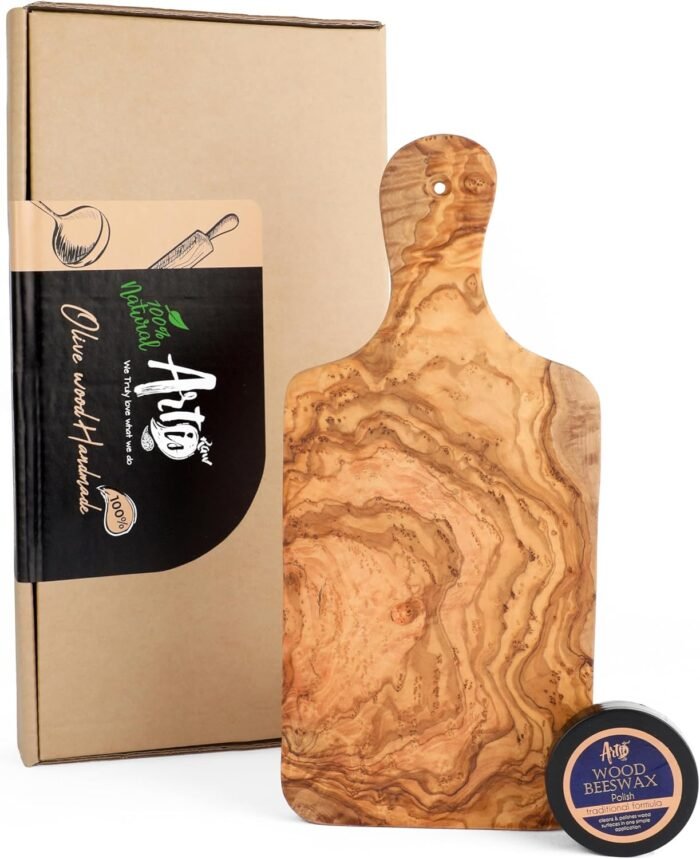
Olive Wood Cutting Board - 34cm (13.4") Large Chopping Board
Olive Wood Cutting Board - 34cm (13.4") Large Chopping Board with Hanging Hole - Rustic Mediterranean Kitchen Board for Chopping, Slicing, and Serving - Durable Design with Beeswax Finish
Olive Wood vs Other Cutting Boards
Olive Wood vs Bamboo
Bamboo is cheaper and lighter. But it’s harder and can dull knives faster.
Olive wood wins in aesthetics and knife care.
Olive Wood vs Maple
Maple is a classic choice in professional kitchens. It’s durable and reliable.
However, olive wood looks more luxurious and has better natural moisture resistance.
Olive Wood vs Plastic
Plastic boards are affordable and dishwasher safe. But they develop deep grooves that trap bacteria.
Olive wood is more hygienic and environmentally friendly.
Best Uses for Olive Wood Cutting Boards
Serving and Presentation
This is where olive wood shines. Use it as a charcuterie board, and you’ll instantly elevate your presentation.
It’s like turning a simple meal into a restaurant experience.
Everyday Chopping
You can use it daily for vegetables, fruits, and bread. Just avoid heavy bone chopping to prevent damage.
Cheese and Charcuterie Boards
Soft cheeses, cured meats, nuts, and crackers look stunning on olive wood.
Your guests will notice.
How to Maintain an Olive Wood Cutting Board
Cleaning Tips
- Wash with warm water and mild soap.
- Dry immediately with a towel.
- Never soak it in water.
Simple, right?
Oiling and Conditioning
Apply food-grade mineral oil or olive oil to keep the wood hydrated. Rub it in with a cloth and let it absorb overnight.
This keeps it from drying out and cracking.
How Often Should You Oil It?
If you use it daily, oil it once every 2–3 weeks. If it looks dry or faded, that’s your sign.
Listen to your board.
Who Should Buy an Olive Wood Cutting Board?
- Home cooks who love stylish kitchens
- People who entertain guests
- Anyone wanting a durable, long-lasting board
- Those who prefer eco-friendly kitchen tools
If you just want the cheapest option, this might not be for you.
But if you value quality and beauty, it’s a great choice.
Final Verdict – Is It Worth Buying?
So, is an olive wood cutting board worth it?
Yes—if you want durability, beauty, and sustainability in one package.
It’s not just a cutting board. It’s a statement piece for your kitchen. Just like a perfectly fitted outfit enhances your appearance, it instantly elevates your kitchen’s style. Maintain it properly, and it will deliver long-lasting performance for years to come.
Conclusion
An olive wood cutting board blends functionality with elegance. It’s durable, knife-friendly, naturally moisture-resistant, and visually stunning. While it costs more and requires regular maintenance, the long-term benefits outweigh the downsides.
If you’re ready to upgrade your kitchen game, olive wood is a smart and stylish investment.